PGM Putters — Which One Matches Your Stroke? | FairwayWise
If you have a straight-back-straight-through stroke, get a PGM mallet like the TUG046 — face-balanced, CNC-milled, adjustable weighting. If you have an arcing stroke, get a blade like the TUG036 — toe-hang, firmer feedback, stainless steel construction. PGM makes 15 putters from $60 to $320. Most are CNC-milled. Several have adjustable weighting. This is the strongest category in PGM’s entire lineup.
Budget putters from most brands are cast — metal poured into a mold, cooled, shipped. PGM mills theirs from solid blocks of metal on CNC machines. Same manufacturing method as putters costing $300–400. The catch: you don’t get the brand cachet or the premium insert feel. You get a precisely machined face, a 303 stainless shaft, and a price that leaves room in your budget for lessons.
But here’s the thing about putters. The most expensive putter in the world won’t fix a bad read. A $60 PGM putter with a square face and a confident stroke will outperform a $400 Scotty Cameron with shaky hands. Pick the putter that fits your stroke type. Practice with it. The equipment does the rest.

Mallet or Blade? Pick Your Stroke Type First
Before you look at individual models, figure out which putter shape fits your natural stroke.
Straight-back, straight-through stroke
The putter face stays square to the target throughout the stroke. More forgiving on off-center hits — the weight is spread to the perimeter. Easier to align because the head is wider. Best for golfers who push or pull putts because the face rotates.
PGM models: TUG046, TUG047, TUG045, TUG044, TUG043, TUG042, TUG041, TUG040, TUG038, TUG013, JRTUG013
Arcing stroke — the face opens and closes
More feel and feedback. Better distance control for golfers with a repeatable stroke. Punishes mishits more than a mallet. Preferred by traditionalists who learned on a blade. Less forgiving but more rewarding when struck pure.
PGM models: TUG036, TUG039, TUG048, TUG049
Not sure which stroke you have? Film yourself from face-on. If the putter head moves in a straight line — mallet. If it arcs inside on the backswing and back to square at impact — blade.
Putter Technology 101: What the Specs Actually Mean
PGM’s putter descriptions use terms like “CNC-milled,” “face-balanced,” and “MOI.” Here’s what they mean for your putting — not for a engineering textbook.
CNC-Milled Face
A computer-controlled cutting tool machines the face from a solid block of metal. Every groove is identical in depth, width, and spacing. Result: the ball launches the same way every time, regardless of where on the face you strike it. Cast faces (metal poured into a mold) have microscopic irregularities that create small inconsistencies in roll. CNC milling removes that variable. PGM uses this on TUG036, TUG046, TUG047, and TUG049.
Face-Balanced vs Toe-Hang
Balance the shaft on your finger. If the face points up — face-balanced (for straight strokes). If the toe drops down — toe-hang (for arcing strokes). Face-balanced putters resist rotation. Toe-hang putters naturally open and close. Neither is better — they fit different strokes. PGM’s mallets are face-balanced. Their blades have toe-hang.
MOI (Moment of Inertia)
How much the putter resists twisting when you hit the ball off-center. Higher MOI = ball stays closer to your intended line on mishits. Mallets have higher MOI than blades (weight is spread to the perimeter). The TUG047’s bullhorn design pushes MOI the furthest in PGM’s lineup — if you miss the center often, this matters.
303 Stainless Steel Shaft
Higher tensile strength and torsional stiffness than generic steel. Less flex during the stroke. The face stays squarer through impact. Subtle difference on a 4-footer. Meaningful difference on a 25-footer where any face rotation sends the ball offline. PGM uses 303 SS shafts on the TUG046 and TUG047 — the same material used on putters costing twice as much.
PGM’s CNC-Milled Putters (Premium Tier)
These are the putters where PGM’s manufacturing strengths are most visible. CNC-milled faces. 303 stainless steel shafts. Adjustable weighting on select models. The kind of specs you’d find on a $300+ putter from a premium brand.
| Model | Type | Face | Material | Shaft | Price | Best For |
|---|---|---|---|---|---|---|
| TUG046 | Mallet | CNC-Milled 2-Way | Aluminum | 303 SS | $180–250 | Best all-around. Adjustable weight. Milled precision + tunable feel. |
| TUG047 | Mallet | CNC-Milled | Steel | 303 SS | $250–320 | Max perimeter weighting. Bullhorn design. Most stable on mishits. |
| TUG048 | Blade | Smooth Milled | Steel | Steel | $120–180 | Classic blade look. Clean face. No insert. Pure feedback. |
| TUG036 | Blade | CNC-Milled | Stainless Steel | Steel | $280–320 | Full stainless blade. Firm feedback. For players who want to feel every strike. |
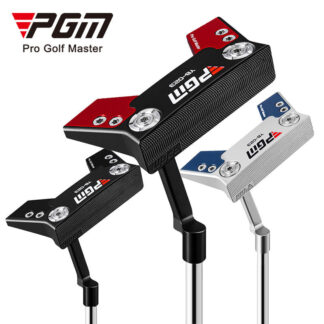
The TUG046 is the putter most people should buy. CNC-milled two-way patterned face — horizontal grooves control launch, vertical grooves control side spin. The ball starts rolling end-over-end faster. Less skid. More predictable distance. 303 stainless shaft resists twisting — the face stays square through impact. Tail screw counterweight lets you adjust feel: heavier for stability on short putts, lighter for touch on lag putts. Three colors: Blue, Black, Red.
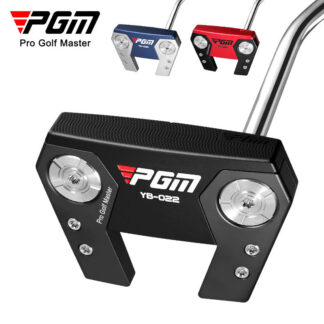
The TUG047 goes further on perimeter weighting — the bullhorn shape pushes mass to the heel and toe. Highest MOI in the PGM lineup. If you struggle with off-center strikes and your misses tend to come up short, the TUG047’s extra forgiveness is worth the premium.
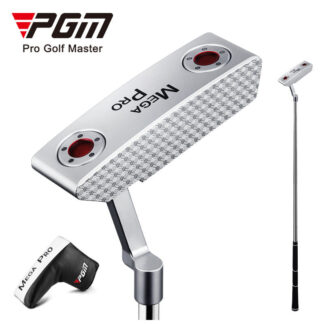
For blade players, the TUG036 is a full stainless CNC-milled blade. Firm. Direct. No insert to soften the feedback. You’ll know exactly where you hit every putt — which is exactly what blade players want. The TUG048 offers a cleaner, simpler blade at a lower price — smooth milled face, classic shape, no adjustability.
PGM’s Aluminum & Insert Putters (Mid Tier)
These putters use aluminum bodies or polymer inserts to create softer feel at lower prices. Less precision than the CNC-milled tier. More forgiveness than a traditional blade.
| Model | Type | Face | Material | Price | Best For |
|---|---|---|---|---|---|
| TUG045 | Mallet | Polymer Grooved | Aluminum | $100–150 | Softest feel. Standing design. No-bend hosel for seniors. |
| TUG039 | Blade | Polymer Insert | Steel | $120–160 | Soft insert blade. Closest to Odyssey White Hot feel. |
| TUG049 | Blade | CNC-Milled | Steel | $150–200 | Bolt-on adjustable length. Fixed shaft. No wobble. |
The TUG045 “standing putter” is the most unique design in PGM’s lineup. The head sits square on the ground by itself — you don’t have to hold it in place while you line up. Walk behind it. Read the line. Step in and stroke. The no-bend hosel means you’re not crouching — easier on the back for seniors and golfers with flexibility issues. The polymer insert feels softer than milled metal. If you want the putter to do the alignment work for you, this is the one.
The TUG039 uses a polymer insert — think of it as PGM’s answer to the soft-insert feel of premium brands. Not as crisp as a milled face. But if you prefer a muted, soft sensation at impact, this is the PGM putter that delivers it.
The TUG049 adjustable-length putter takes a different approach than telescoping shafts. The shaft is fixed — you bolt on different sections to change length. This avoids the wobble and creaking that plague telescoping designs. CNC-milled interfaces mean tight tolerances at the connection points. If you’re between standard lengths or share the putter with someone of different height, the adjustability is useful.
PGM’s Budget Putters
| Model | Type | Face | Price | Best For |
|---|---|---|---|---|
| TUG040 | Mallet | Grooved | $70–100 | Best value — mallet forgiveness at the lowest price |
| TUG038 | Mallet | Grooved | $60–90 | Budget mallet — basic alignment, functional |
| TUG041 | Mallet | Grooved | $65–95 | Compact mallet — slightly smaller head |
| TUG042 | Mallet | Grooved | $70–100 | Mid-size mallet — balanced shape |
| TUG043 | Mallet | Smooth | $60–85 | Basic mallet — clean design, no frills |
| TUG044 | Mallet | Grooved | $80–110 | Larger mallet — more alignment help |
| TUG013 | Mallet | Smooth | $50–70 | Entry-level — the cheapest PGM putter |
| JRTUG013 | Mallet | Smooth | $40–60 | Junior putter — shorter, lighter, smaller grip |
The budget tier is where PGM fills out the lineup. These are functional, forgiving mallets without the CNC milling or adjustable weighting of the premium models. The TUG040 is the best value here — grooved face for roll consistency, mallet head for forgiveness, under $100. If you’re upgrading from a box-set putter and don’t want to spend $200+, this is your putter.
PGM vs Used Premium Putters: New Budget or Used Brand-Name?
A question that comes up constantly in golf forums: “Should I spend $200 on a new PGM or $200 on a 3-year-old Odyssey/TaylorMade/Scotty Cameron?” Here’s the honest breakdown.
| New PGM ($150–250) | Used Premium ($150–250) | |
|---|---|---|
| Face condition | Perfect — zero wear, fresh grooves | Variable — scratches, worn sweet spot, faded insert |
| Shaft | Straight, no damage, factory spec | Could be bent, could be cut (changes swing weight) |
| Grip | New, factory-installed | Often needs immediate replacement |
| Technology | Current-gen CNC milling, adjustable weight | Previous-gen — still good, but not latest |
| Warranty | Yes — manufacturer warranty | No — as-is, buyer beware |
| Feel & Sound | Good — precise, firm feedback | Often better — premium brands invest in acoustics R&D |
| Resale value | Low — PGM doesn’t hold value | Moderate — brand names depreciate slower |
The verdict depends on what you value: If you want a known quantity — new, straight, unworn, warrantied — get the PGM. The CNC-milled face on a TUG046 is genuinely well-made, and you’re not inheriting someone else’s bag chatter or a bent shaft you didn’t notice in the listing photos.
If you care about sound, feel, and brand prestige — and you’re willing to inspect a used club carefully or buy from a trusted source — a used Odyssey or similar can be great. The insert feel and acoustic tuning on premium putters is genuinely better. It’s the one area where PGM’s cost savings show. A used premium putter that’s been well cared for will sound and feel more refined than a new PGM. It will also have unknown history, no warranty, and possibly need a new grip immediately.
For most golfers reading this guide: get the new PGM. You’re researching putters online, which means you’re not a scratch golfer who can feel the difference between 3° and 4° of loft. The TUG046 will serve you just as well as a used Odyssey — and you’ll know exactly what you’re getting.
All 15 PGM Putters at a Glance
| Model | Type | Face | Shaft | Adjustable | Price |
|---|---|---|---|---|---|
| TUG047 | Mallet | CNC-Milled | 303 SS | — | $250–320 |
| TUG036 | Blade | CNC-Milled | Steel | — | $280–320 |
| TUG046 | Mallet | CNC-Milled 2-Way | 303 SS | ✅ Weight | $180–250 |
| TUG049 | Blade | CNC-Milled | Steel | ✅ Length | $150–200 |
| TUG048 | Blade | Smooth Milled | Steel | — | $120–180 |
| TUG045 | Mallet | Polymer Insert | Steel | — | $100–150 |
| TUG039 | Blade | Polymer Insert | Steel | — | $120–160 |
| TUG044 | Mallet | Grooved | Steel | — | $80–110 |
| TUG040 | Mallet | Grooved | Steel | — | $70–100 |
| TUG042 | Mallet | Grooved | Steel | — | $70–100 |
| TUG041 | Mallet | Grooved | Steel | — | $65–95 |
| TUG043 | Mallet | Smooth | Steel | — | $60–85 |
| TUG038 | Mallet | Grooved | Steel | — | $60–90 |
| TUG013 | Mallet | Smooth | Steel | — | $50–70 |
| JRTUG013 | Mallet | Smooth | Junior | — | $40–60 |
Which PGM Putter Should You Buy?
Arcing — face opens and closes → Blade. Toe-hang. TUG036 for firm feedback, TUG039 for softer insert feel.
$100–200 → TUG045 (softest feel) or TUG048 (classic blade) or TUG049 (adjustable length).
$200+ → TUG046 (adjustable weight) or TUG047 (max stability) or TUG036 (full stainless blade).
I want to tune my feel → TUG046 — adjustable tail screw weight. Heavier or lighter on demand.
I share with someone / unusual height → TUG049 — bolt-on length adjustment without wobble.
I want the softest possible feel → TUG039 polymer insert blade or TUG045 polymer insert mallet.
Frequently Asked Questions
Q1: Are PGM putters actually CNC-milled?
A: The premium models (TUG046, TUG047, TUG036, TUG049) are. A computer-controlled machine cuts the face from solid metal following a digital pattern. Every groove is identical. This is the same manufacturing process used on putters from premium brands costing $300–400. The budget models use grooved or smooth cast faces — still functional, less precise.
Q2: What’s the best PGM putter for beginners?
A: The TUG046. Mallet head for forgiveness on mishits. CNC-milled face for consistent roll. Adjustable weight so you can experiment with what feels right. Face-balanced design works for most beginners’ natural stroke. If the budget is tighter, the TUG040 does 80% of what the TUG046 does for less than half the price.
Q3: How does a $180 PGM putter compare to a $400 Odyssey or Scotty Cameron?
A: The manufacturing method is the same — CNC milling. The materials are comparable — 303 stainless steel shafts, aluminum or steel heads. The difference is refinement: sound engineering, insert R&D, Tour validation, brand prestige. A PGM putter won’t feel or sound exactly like a premium brand’s equivalent. But the performance gap — especially for non-scratch golfers — is smaller than the price gap suggests. Forum consensus: PGM putters are 80–90% of the performance at 30–50% of the price.
Q4: What’s the difference between the TUG046 and TUG047?
A: The TUG046 is an aluminum-body mallet with adjustable tail-screw weighting. The TUG047 is a steel-body mallet with bullhorn perimeter weighting and no adjustability. The TUG046 is more versatile (tune the weight). The TUG047 is more stable (higher MOI, more mass at heel and toe). Get the TUG046 if you want to experiment with feel. Get the TUG047 if you want maximum forgiveness on mishits.
Q5: Can I adjust the length of a PGM putter?
A: Only the TUG049 has adjustable length — it uses a bolt-on system, not a telescoping shaft. The shaft is fixed at each setting, so there’s no wobble or creaking. All other PGM putters are fixed-length. If you need a different length, buy the right length rather than cutting — cutting changes swing weight.
Q6: Do PGM putters come with a headcover?
A: Yes, all PGM putters include a headcover. The premium models (TUG046, TUG047, TUG036) come with better-quality magnetic-closure covers.
Explore More PGM Gear
Shop All PGM Putters
-
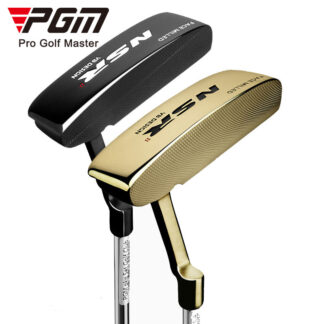
PGM TUG013 NSR II CNC Milled Steel Putter
$62.00 View Details -
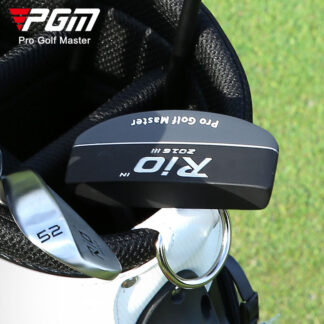
PGM TUG040 Mallet Putter
$71.00 View Details -
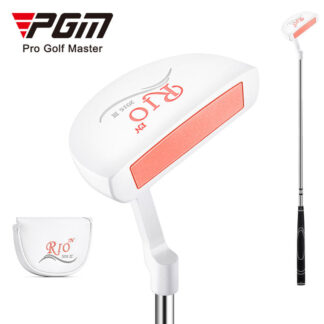
PGM TUG038 Ladies Mallet Putter
$79.00 View Details -
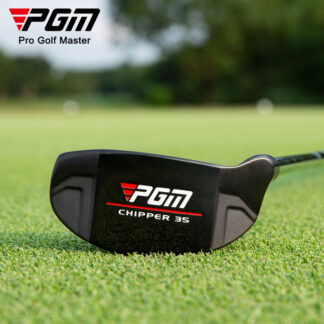
PGM TUG042 CNC Milled Putter Chipper
$118.00 View Details -
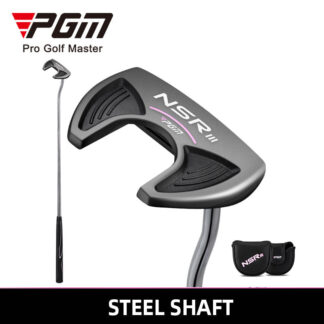
PGM TUG041 Ladies Premium Putter
$124.00 View Details -
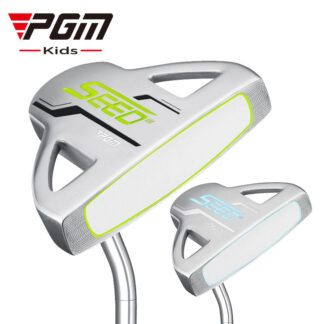
PGM JRTUG013 Junior Putter
$138.00 View Details -
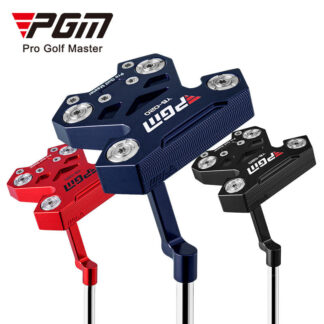
PGM TUG046 CNC Milled Weighted Putter
$285.00 View Details -
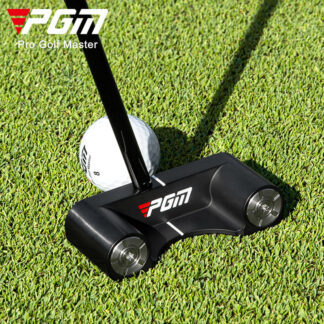
PGM TUG045 Standing CNC Putter
$291.00 View Details -
PGM TUG048 Aluminum Mallet Putter
$318.00 View Details -
PGM TUG036 Universal Mallet Putter
$318.00 View Details -
PGM TUG047 CNC Milled Mallet Putter
$351.66 View Details -
PGM TUG044 Mini Adjustable Putter
$352.00 View Details -
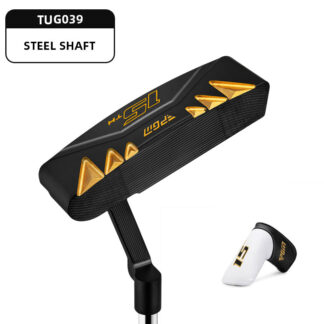
PGM TUG039 Forged Soft Steel Putter
$418.00 View Details -
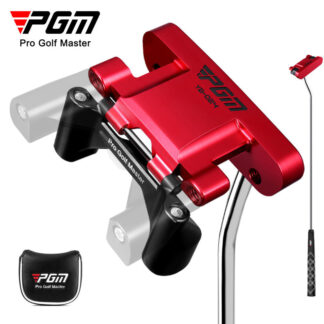
PGM TUG049 Transformable CNC Putter
$489.00 View Details -
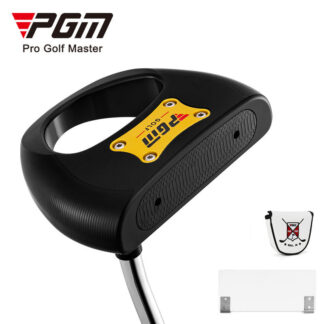
PGM TUG043 Laser Alignment Putter
$508.00 View Details