


Description
All-Around Mallet Putter — PGM TUG036 — Low CG, High Forgiveness, One Putter That Covers the Bases | FairwayWise
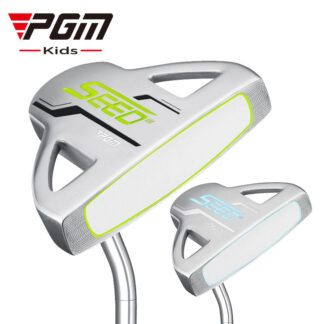
The PGM TUG036 is built around a simple idea: a putter shouldn’t force you to choose between forgiveness and feel, straight stroke and arc, beginner and mid-handicap. Its low center of gravity mallet head keeps off-center strikes on line.
The CNC-machined face gives you enough feedback to know where you struck the ball — without the harsh punishment of a blade. And the balanced head profile works for both straight strokes and slight arcs. If you’re a mid-handicapper tired of three-putting from 30 feet — or a beginner who wants a putter you won’t outgrow in six months — this is the all-rounder in the FairwayWise lineup.
PGM has been quietly showing up in “best value mallet” conversations across golf review sites — their Anti-Twist model was namechecked alongside budget brand and budget brand as delivering premium-level forgiveness at a fraction of the price. The TUG036 takes that same value engineering and adds a CNC-machined face and premium alloy construction.
At this price, most brands give you a cast zinc head and a paint finish. The TUG036 gives you machining and materials that usually cost more.
Specifications at a Glance
DesignUniversal MalletBalanced profile — works for straight and slight arc strokesAll-Rounder
BodyPremium Alloy, Low CGCG positioned low — cleaner launch, less skid, more predictable roll
FaceCNC-MachinedNot cast — machined for consistent contact across the faceMilled
ForgivenessHigh Fault ToleranceOff-center strikes stay on line — no “microscopic sweet spot”Forgiving
ShaftSteel
Length34 inches (Standard)
“Universal” Isn’t a Compromise. It’s the Answer to the Wrong-Putter Problem.
Here’s a stat that should make every mid-handicapper pay attention: a 15-handicap averages 3.3 three-putts per round. That’s nearly seven strokes lost to putting every 18 holes.
And one of the most common reasons — confirmed across GolfWRX threads by golfers who fixed their putting — is simply using the wrong type of putter for their stroke. Blades for people who need mallets. Face-balanced for people with arcing strokes. A putter that worked for their friend but not for them.
The TUG036 sidesteps this entire problem. Its head profile sits between a compact mallet and a mid-mallet — wide enough for perimeter weighting, compact enough to look clean at address.
The balance is neutral: stable enough for a straight stroke, but with enough toe flow to accomodate a slight arc. It’s the putter equivalent of a well-fitted iron set: nothing extreme, everything capable. Hand it to four different golfers and they’ll all find something to like — because it was designed to work for most golfers, not optimized for one specific type.
The low center of gravity is the engineering detail that ties it together. A low CG helps the ball launch cleanly with less initial skidding. Less skid = the ball starts rolling sooner.
Rolling sooner = more predictable distance. And predictable distance — not perfect line — is what separates two-putts from three-putts for mid-handicappers. The TUG046 (adjustable weighting) and TUG047 (bullhorn max-MOI) are more specialized tools. The TUG036 is the one you grab when you just want the ball to go where you aimed it.
What the Reviews Say About PGM — And What That Means for You
PGM has been showing up in value putter roundups — their Anti-Twist model was listed alongside budget brand and budget brand as delivering “tech-first value” at budget pricing. The consensus from those reviews: value models in the $40-120 range deliver 80-90% of the forgiveness and alignment benefits of $300+ premium mallets. What the extra money buys in premium putters is feel refinement, brand prestige, and marginally better materials — not dramatically better forgiveness.
The TUG036 sits above that budget tier. At this price, you’re getting a CNC-machined face (not cast), a premium alloy body (not basic zinc), and a low-CG design that was engineered, not accidental.
The gap between the TUG036 and a $400 major brand isn’t forgiveness — it’s the urethane insert feel that some golfers love and others find too muted. If you want a firm, direct face with clear feedback on every strike, the TUG036 delivers what premium milled putters do — without the premium markup. If you prefer that soft soft polymer insert squish, that’s a valid preference too.
But here’s the thing. One of the most consistent complaints about affordable putters — surfaced in reviews and forum threads — is finish durability. Paint that chips after a season. Coatings that show scratches after a few rounds.
Alignment lines that fade. The TUG036’s premium alloy body and machined face don’t rely on paint for their look or performance. Clean it after rounds, keep the headcover on between shots, and it’ll look the same after multiple seasons. That’s not marketing — it’s materials.
Who Is This For? (And Who Should Skip It)
Best for
- Mid-handicappers shooting 85-95 who three-putt too often. The low CG helps with distance control on long putts — the #1 cause of three-putts for this handicap range. Get your lag putting dialed in and watch your scores drop.
- Golfers who don’t know their exact stroke type. If you’ve never been fitted or filmed your stroke, you don’t know whether you arc or go straight. The TUG036 works with both. No wrong choice.
- Anyone who’s been burned by a cheap putter’s durability. If you’ve had a budget putter where the finish wore off or the face developed dead spots, the premium alloy construction here directly addresses that frustration.
- Gift buyers. Universal fit, reasonable price, quality materials. The safest putter to give when you don’t know the recipient’s preferences.
Skip if
- You love the feel of a urethane insert. The TUG036 has a firm, machined-metal face — not the soft, muted sensation of an premium insert putter or major brand Pure Roll insert. Neither is better; they’re just different.
- You’re a single-digit handicap seeking tour-level precision. The TUG036 prioritizes forgiveness over surgical feedback. Scratch golfers who want to feel every micron of face contact should look at higher-tier milled options.
- You need a specific feature that another FairwayWise putter does better. Standing? TUG045. Putter+chipper? TUG042. Adjustable weighting? TUG046. Max MOI? TUG047.
How the TUG036 Compares
| Feature | PGM TUG036 | Typical $150-250 Value Mallet | Premium $400+ Mallet |
|---|---|---|---|
| Face | CNC-machined alloy | Cast or basic milled | Deep-milled or insert |
| Body | Premium alloy, low CG | Cast zinc or basic alloy | Multi-material (steel/aluminum/tungsten) |
| Forgiveness |
|
|
|
| Finish Durability | Anodized/machined — won’t chip | Paint — shows wear in 1-2 seasons | PVD or premium plating — very durable |
| Stroke Fit | Universal (straight + slight arc) | Usually face-balanced only | Model-specific (choose your fit) |
| Price | $318 | $150-250 | $400+ |
Bottom line: The TUG036 doesn’t try to beat major brand on insert feel or major brand on multi-material construction. It competes on being a genuine all-rounder with premium-level materials and CNC machining at a price that sits between budget and premium — and on being the one putter that works if you don’t know exactly what type you need.
How to Get the Most Out of the TUG036
Fix your lag putting first. Mid-handicappers three-putt most often because their first putt finishes 5-6 feet away instead of inside 3 feet. The TUG036’s low CG helps here — it reduces initial skid and gets the ball rolling sooner, which makes distance more predictable. But equipment only does half the work.
Spend 15 minutes before each round on the ladder drill: putt from 20, 30, and 40 feet until you consistently leave every ball within a 3-foot circle. When your lag putting improves and your three-putts drop from 3.3 to 1.5 per round, that’s 3-4 strokes saved — without changing your swing.
Trust the universal design — don’t fight it. The TUG036 is balanced to work with whatever stroke you naturally have. Don’t try to force a straight stroke or manufacture an arc.
Set up comfortably, let your shoulders rock, and let the putter follow its natural path. Golfers who switch between forcing different stroke types are the ones who never feel comfortable over the ball. The TUG036 removes that variable.
Frequently Asked Questions
Q1: How does low CG actually help me three-putt less?
A: Three-putts happen most often because your first putt finishes too far from the hole — not because you missed the line. A low center of gravity helps the ball launch cleanly off the face with less initial skidding and hopping.
When the ball starts rolling sooner, distance becomes more predictable. And predictable distance is what leaves you a tap-in instead of a knee-knocker.
Q2: Will the finish hold up, or will it wear off like cheaper putters?
A: This is one of the most common complaints about budget putters — paint that chips, coatings that scratch, alignment lines that fade after a season. The TUG036 uses a premium alloy body with a machined face, not a painted cast zinc head.
The finish is anodized — bonded to the metal, not sitting on top of it. It won’t chip, peel, or fade with normal use.
Q3: Is this actually forgiving, or does it have one of those “microscopic sweet spots”?
A: This is a real complaint from GolfWRX users about cheap putters — a tiny sweet spot that punishes every off-center strike with harsh feedback and lost distance. The TUG036 is the opposite of that.
The mallet head shape and low CG work together to keep off-center strikes on line and preserve ball speed. You’ll feel the difference between a center strike and a toe strike — the feedback is clear — but the result won’t be dramatically different.
Q4: What does “universal” actually mean — is it just marketing?
A: It means the putter is designed to work well for a range of stroke types and skill levels rather than being optimized for one specific thing. Practically: the TUG036’s head profile and balance work for both straight-back-straight-through strokes and slight arcs.
The forgiveness is high enough for a 20-handicap, but the face feedback is clear enough for a 12-handicap trying to improve. It’s not the best at any one thing — it’s designed to be good at everything.
Q5: Why should I pay $318 for this instead of $200 for a value-priced milled putter or major brand?
A: Different putters for different feel preferences. The value-priced milled putter and premium insert putter OG both use insert faces — a layer of urethane or polymer that creates a soft, muted feel at impact.
Some golfers love that sensation; others find it masks too much feedback. The TUG036 has a firm, direct CNC-machined metal face — you feel exactly where you struck the ball.
Q6: What type of putting stroke does this suit?
A: Straight-back-straight-through and slight arc both work. The TUG036’s neutral balance doesn’t force either stroke type — it’s stable enough for a pendulum motion but has enough toe flow to accommodate a gentle arc. The only stroke it won’t suit is a strong arc (significant face rotation) — for that, you’d want a blade with more toe hang, like the TUG013.
Q7: I’m a 20-handicap. Will I outgrow this putter as I improve?
A: That’s one of the main reasons to choose a universal design over a beginner-specific model. A putter built purely for beginners typically sacrifices feedback for maximum forgiveness — great when you’re learning, limiting when you want to fine-tune your stroke.
The TUG036 gives you enough forgiveness to help now and enough face feedback to help you improve. As you drop from 20 to 15 to 12, you won’t suddenly find the putter holding you back.
Reviews
There are no reviews yet.